 admin
adminAuthor: Kennedy Barasa
Founder and CEO of HeartRise Leadership
Gate 1: Archetype – Abraham – Core Insight
SEE (Envisioning): Vision beyond the familiar
Purpose of this Paper
We explore the key stages of Abraham’s transformative journey and the leadership lessons it provides for today’s leaders, helping them navigate unfamiliar environments.
Introduction
Embarking on the classic story of Abraham instantly draws us into a transformative leadership journey. His story is a master class in purpose-driven leadership, guided by timeless visionary principles and maintained by authentic faith-based leadership. From the moment Abram leaves Ur, we see leadership in unfamiliar environments at its most raw: a pioneer navigating VUCA terrain with only an inner compass and the power of imagination to light the way.
Why does this ancient story still resonate with CEOs and change-makers today? Because the archetype of Abraham captures every stage modern leaders encounter—Vision and Imagination in Leadership, Faith-Driven Decision Making, Navigating VUCA and Uncertainty, Risks of Quick Fixes, and the elusive 360° Mindset Shift for CEOs. Each step in his journey shows how embracing imagination fuels belief, how overcoming obstacles to purpose builds resilience, and how a clear North-Star vision turns uncertainty into opportunity.
By exploring these scenes, you’ll see how a single, vivid picture of “stars in the sky” unlocked the power of imagination in leadership, transforming hesitation into action and establishing a template for purpose-driven leadership that continues to guide visionary organizations. Prepare to retrace Abraham’s footsteps—and in doing so, map your own transformative leadership journey.
1. Vision – what Abram envisioned
• Before God changed his name to Abraham, Abram, along with his household (Terah’s family), left Ur of the Chaldees to go to the land of Canaan. They arrived and settled in Haran. Why? Because it was in Haran that, after Terah’s death, Abram received a divine revelation of his purpose.
• Purpose is a spiritual journey that goes beyond the physical world. It involves listening to that quiet inner voice, your intuitive intelligence, which guides and inspires you from within. It responds to the laments and deep questions you face, which often don’t have simple answers.
The main point to highlight
• Abram left his homeland for a place he neither knew nor had ever seen. Canaan existed in his mind—his imagined destination; it was his vision of the future.
• What you imagine ignites your transformative journey, putting you on a path that will change your entire life.
The question
• Does a vision alone change the course of your life? Not entirely, but a vision with a purpose becomes a powerful motivator and the driving force to move forward.
Haran: The Crossroads of Faith and Transformation
• Abram faced overwhelming challenges at Haran: he had to give up things dear to him, and he found it hard to do so. This internal struggle caused him to wrestle with deep life issues.
• The pain of letting go can feel unbearable, but despite this discomfort, it is necessary to endure it to fulfill your purpose.
Obstacles on the Journey to Fulfilling Purpose
• Abraham encountered impossible obstacles that only divine assistance could overcome. • It is crucial to view obstacles as a natural part of your growth journey. Consider them as opportunities to learn and develop, as well as stepping stones to exciting new horizons and fresh opportunities waiting to be uncovered.
• Overcoming hurdles signals success and progress, serving as a key measure of performance and growth. It is a valuable tool for building confidence, perseverance, character, faith, and hope, while fostering a culture of gratitude.
A Misstep That Could Have Sabotaged Purpose: Dangers of Substitutes
• After waiting a long time for the promise and facing nearly impossible challenges of having children, Abraham, exhausted, turned to a substitute for a solution. • Abram thought about substitutes. A substitute isn’t an authentic item and might not solve your problem. It could lead to issues that are hard to fix, potentially harming your life’s purpose and affecting future generations. Hagar as a wife and Eliezer as the heir – Gen. 15/16… (kill the purpose).
• If God had agreed with Abraham’s view, the purpose He aimed to achieve through Abraham would have been derailed. God used that moment to teach Abraham a powerful, life-changing lesson—the power of imagination.
From Questioning to Believing: Harnessing the Power of Imagination-The Role of Visualization in Purpose and Belief
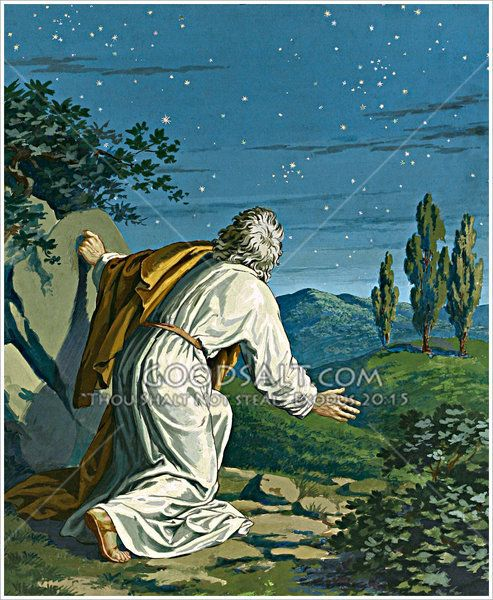
• How can you pursue something you do not see, understand, or feel convinced of? • Genesis 15:1-6 depicts a significant conversation between God and Abram, whose name God later changed to Abraham. God promises Abram protection and a big reward. Abram asks, ‘What good are your blessings when I have no son?’ because you have not given me a son, a descendant of my own, so Eliezer, a servant in my household, will be my heir. God reassures Abram that he will have his own son; then God takes Abram outside and asks him to look up at the sky and count the stars if he can. God tells Abram that your descendants will be as many as the stars, which you cannot count. Then Abram believed God, and God counted him as righteous because of his faith.
• Question: Why did Abram trust God’s promise after contemplating the countless stars? The answer is rooted in the incredible power of imagination.
• Power of Imagination: Let us briefly explore how imagination and metaphor reveal the profound transformation Abram experienced, changing from doubt to complete faith in God. As he neared 100 years old, up from 75 when God promised to make him into a great nation before he left Haran for Canaan, Abram might still have had lingering questions about the promise. He asked the question, and God responded with the visual image of the stars. As Abram gazed at the stars, he could not count them; he envisioned a vivid mental picture of his future descendants, yet to come.
• Seeing: As he envisioned, what was abstract became vividly real, even though he had to wait for it to come true. His mental eyesight sharpened; Abram believed in God and became the father of faith.
• Faith: Hebrews 11:1 describes faith as the substance of things hoped for, the evidence of things not seen. Evidence is frequently used in law to assist parties in convincing a judge or jury of the validity of their claims. God used the stars as tangible evidence to show Abram the reality of his descendants to come. In architecture, the architect shares detailed drawings of an envisioned building and transforms them into an eye-catching prototype, complete with a billboard that says, “Coming Soon.” Similarly, this applies to industrial designs and production.
• Metaphor: Zuck R.B. (1991) emphasizes the significant role of metaphors, quoting MacNeil Dixon, a thoughtful professor of English literature at the University of Glasgow. Dixon noted that the human mind is like a gallery filled with pictures; through vivid imagery, we can understand the essence of the human soul. God beautifully reflected Abram’s soul with imagery of stars.
• Lead With Heart: When Abram asked God his question, he did so sincerely from his heart, expressing genuine emotions — honest and authentic. Abraham exemplifies a leader who led with heart.
• Belief: Remember that belief can stem from trusting things we cannot see but feel with our imagination. Keep an open heart and mind, and you will find your unique path forward.
• Shift: Abraham’s inspiring and transformative journey took an exciting new turn when he embraced the power of imagination. This empowering shift allowed him to navigate the challenging terrain of volatility, complexity, uncertainty, and ambiguity with confidence, operating in a realm of clarity and insight.
A Shift that Profoundly Transformed Abraham
• Despite God’s promise, Abram often felt overwhelmed by his limitations—time passing, daily worries, and his wife’s struggle with barrenness—all of which made it harder for him to see clearly and stay focused on his true purpose.
• Abraham experienced a 360-degree transformation, which involves a shift in mindset, changing how he sees the world, and ultimately leading to a complete change in worldview, values, behavior, and identity.
• In the business world, 360 transformation involves rethinking how companies connect with customers and manage their internal processes. It highlights the importance of putting the customer at the center of everything, promoting a more integrated and responsive approach.
• Leading with heart and purpose-driven leadership encourages us to prioritize the needs of followers.
Embrace Adventure by Letting Go of Familiarity
• “Seeing” goes beyond just physical sight; it signifies a deep understanding of one’s purpose and destiny, free from past influences.
• This shift often involves releasing familiar behaviors and attachments that hinder our ability to see clearly.
• Furthermore, it consists of moving from the familiar to the unfamiliar, from scarcity to abundance, from seeing challenges as obstacles to viewing them as opportunities, from believing something is impossible to believing it is possible, from craving certainty to accepting uncertainty, from disbelief to faith, and from focusing on the present to imagining the future.
• Our mindset, worldview, and life philosophy are shaped by what we observe. If your vision is blurry, how vague is your understanding of your purpose and potential? • Abraham’s example emphasizes the importance of making a significant shift in perspective to truly understand and achieve one’s purpose.
• Breaking through self-imposed barriers is crucial for this transformative process.
The Environment in Which Abraham Lived or Existed
Primarily characterized by unfamiliarity.
• Unfamiliarity causes uncertainty and unpredictability, which can lead to anxiety, fear, and stress.
• A lack of familiarity can make things unclear, leading to confusion and prompting us to reevaluate our assumptions.
• When you’re unfamiliar with something, it is hard to see how its unusual parts connect. They might seem separate initially, but they are actually linked. This can sometimes create a view of the world that feels more isolated or distant.
• Unfamiliarity can sometimes make the purpose unclear or even seem unreachable. Learning more about it can make a difference.
• When we are unfamiliar with something, it can make risks seem bigger and hide potential opportunities, causing us to focus on imagined dangers.
• Feeling unfamiliar can inspire awe and wonder, sparking curiosity about uncovering hidden truths or exploring the unknown, while offering a new perspective on things or reality. It encourages us to learn and adapt, which can lead to meaningful growth and bolster our resilience.
• Unfamiliarity can unexpectedly lead us on a path of adventure, discovery, and transformation, sparking a strong and insatiable desire for change.
Although the context may change, unfamiliarity in ancient times remains the same as in modern times.
Competencies Abraham Demonstrated
• Clarity of purpose, values, and vision
Purpose: Abraham had an intense sense of purpose. The name Abram means “father of a nation,” and Abraham signifies “father of nations.” He built his life and legacy around this guiding principle. It was his North Star. The North Star is a powerful metaphor that explains purpose, acting as a steady and inspiring guide that directs individuals toward their destined path
(Dhingra & Schaninger, 2021). It represents a sharp vision or goal that guides decision-making and motivates during tough times (Vance, 2024).
Vision: Abraham’s lifelong goal of becoming the father of a nation led him on a journey into an unknown land, Canaan. Letting go of his past, he kept his eyes and heart firmly fixed on his North Star. According to George, the concept of an individual’s “true north” captures one’s core values and beliefs, which develop through life’s story and challenges, ultimately guiding one’s leadership purpose.
Belief: Abraham’s unwavering faith in God shaped the core values that guided him and his descendants, influencing their decisions and stewardship.
Strategic Foresight: Demonstrating an inquisitive, curious, and forward-looking mindset, Abraham exemplifies a purpose-driven leader with foresight.
Seeing and Envisioning in Today’s Rapidly Evolving Environment
The envisioning leadership principle involves a leader’s ability to develop and share a compelling future vision that guides an organization’s course. This vision not only directs strategic efforts but also aligns individual objectives with broader organizational goals. It enables leaders to adapt quickly, foster innovation, encourage collaboration, and build resilience.
Conclusion
The archetype of Abraham concludes his transformative leadership journey exactly where today’s leaders aspire to reach: grounded in purpose-driven leadership, inspired by visionary principles, and steadfast with unwavering faith-based leadership. He exemplifies leadership in unfamiliar environments that refuses to settle for substitutes, continuously leveraging the power of imagination to see opportunities where others see danger.
As you practice these lessons—Vision & Imagination in Leadership, Faith-Driven Decision Making, and the courage to keep overcoming obstacles to purpose—remember that every bold step starts with an inner image as vast as the night sky. Let Abraham’s star-filled canvas inspire you to your own 360° mindset shift, turning challenges into opportunities and uncertainty into breakthroughs.
Step forward confidently, knowing that your organization, like Abraham’s descendants, can become “more numerous than the stars” when guided by a clear vision and unwavering faith. That is the lasting promise—and reward—of embracing the transformative leadership journey.
© 2025 HeartRise Leadership. All rights reserved.